
 IT
 EN
In 2007, I sold a house in Aprilia to an Albanian family. The deed was signed in Rome, and the wife and husband each acquired a half share. They were happy: keys in hand, children to enrol at the local school, a feeling that they had put down roots. None of us imagined how much the property market would soon change.
What no one could see
This was more than a decision made by two people. It was a family’s decision within a system larger than itself. In the preceding years, rising house prices and the availability of credit had encouraged confidence in buying a home. Taking out a mortgage seemed a natural step towards a more settled life. The value of the property used as security helped sustain that confidence.
The downturn
When the market changed, a certainty on which so many had built their future disappeared: the belief that their home would remain worth enough to cover the debt. The consequences weighed most heavily on vulnerable families who had borrowed to buy when prices were high.
For this family, illness compounded the financial difficulties. It was the decisive blow. The lady developed cancer. The house that had represented a life finally built became the setting for an increasingly uncertain future. Eventually, it became clear that they could no longer manage: the repayments were unaffordable, and the outstanding debt far exceeded the property’s value.
They came back to me and asked me to do something. She told me about her illness, lifted her shirt and showed me the scar from an operation a few months earlier. She was hopeful that she would recover. She asked me to give her my word that I would help them.
I told her I would resolve the situation, although I felt the doubts that professionals experience when entrusted with seemingly impossible cases. The house was worth around a third of the outstanding debt. Above all, she wanted to protect her family from trouble. As she spoke, concern for her husband and children came before concern for herself.
The bank, the report, the promise
At the bank that had granted the mortgage, I found a manager willing to listen and take a practical approach. In a case that risked being treated solely as a debt account, he chose to consider the circumstances of the people involved. He asked me for a detailed report on the property’s value and everything I had done to sell it. I prepared it.
In the meantime, the lady died.
I was left with a promise made to someone who was no longer there. I remember wondering, with the bewilderment of the hardest moments, what I could do now. But a promise does not end with the person to whom it was made.
It felt as though she was still watching me, if I may put it that way, from wherever she was. Before me were her husband and three children — two boys and a girl — who were still minors when their mother died and had become her heirs. The youngest had been born just three years before the house was purchased.
The situation was complicated. The property was subject to enforcement proceedings for approximately two hundred thousand euros. We needed to protect the minor heirs’ rights, secure the necessary authorisations and address proceedings that were already under way.
Letting the case follow its course through the courts would have been the simplest option for everyone, including me.
The day of the deed
I did not let that happen.
Together with our lawyer, we prepared an application to the guardianship judge, because the children were minors and authorisation was needed to dispose of their rights in the property. We obtained what was required and reached a full and final debt settlement: seventy-eight thousand euros to close the family’s debt position for good.
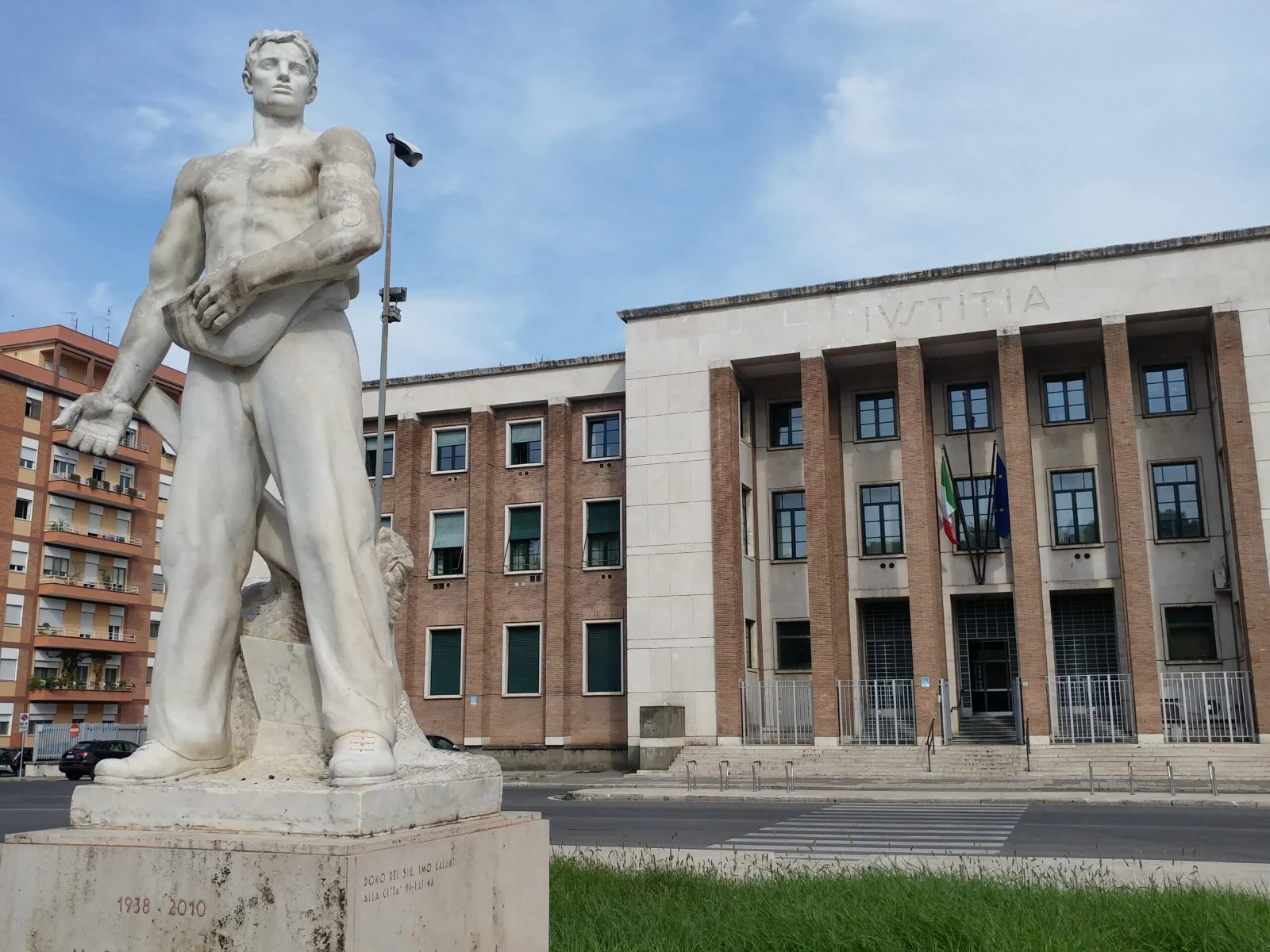
The transaction also required coordination with a second bank and the buyer’s mortgage. The process came to an end one day in February 2015, at the Court of Latina.
I need to pause here, because this is the moment that still brings a lump to my throat. The deed was signed in the courthouse corridors rather than in a notary’s office. On one side, the steps needed to close the enforcement proceedings were being dealt with before the enforcement judge. On the other, the notary was completing the sale. Two separate processes took place that same afternoon, just a few metres apart.
The father was there, acting for himself and, under the authorisation obtained, for the children who were still minors. The eldest son, who had since reached adulthood, and the buyer were also present.
That was how I kept my promise. The house was sold through a notarial deed, in a transaction that enabled the debt issue to be resolved. The three children would not have to carry the burden of that debt with them.
What the cadastral record does not say
Look at the historical cadastral record for that property, and you will find its creation, the transfer to an earlier owner, the couple’s purchase, the inheritance update and the transfer to its current owner. The dates are there; the formal sequence is recorded.
Yet that line — “official update following inheritance” — is an administrative entry for the cadastral office. For me and four other people, it recalls the loss of a woman to whom I had made a promise.
The record notes dates. It does not say what I had promised her, or how hard it was to keep my word. It does not tell you that everything ended in a courthouse corridor, with a judge and a notary just a few steps apart: one dealing with the closure of the enforcement proceedings, the other with a sale that would open a new chapter for the house.
It does not tell you about the illness, the three children, the guardianship judge’s authorisation or the bank manager who chose to consider the people as well.
Nor does it tell you about the many families who, in those same years and in similar circumstances, found no help capable of guiding them towards a solution. The record notes the fate of a property; it has no boxes for the fate of people.
For me, this is a story of a home sold: the part that matters most never makes it into the cadastral record.

Maria Ippoliti · ClouCasa®